
Georgia Southern Spanish students explore innovative, accessible research opportunities beyond the classroom
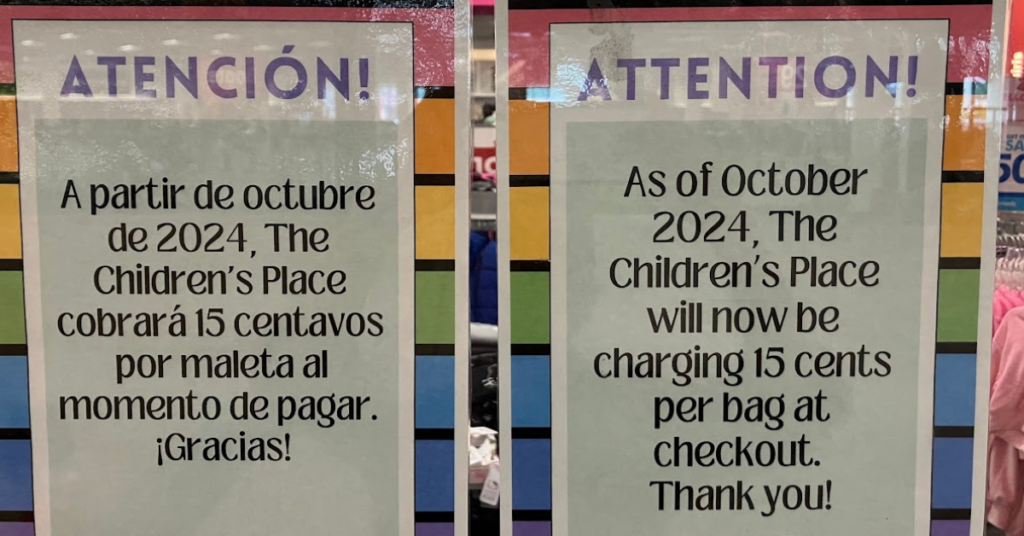
How often do you notice Spanish in your community? A group of student researchers sought to discover the sociolinguistic uses of the Spanish language throughout two of Georgia Southern University’s communities: Statesboro and Savannah. Through this research, students gained valuable undergraduate research skills while also raising awareness of the linguistic landscape of the communities the University serves.
For Miguel García, Ph.D., who taught the course, research isn’t just a means of concluding; it’s also an invaluable learning opportunity for students.
“These experiences build confidence, develop transferable skills and prepare students for graduate study and professional careers. At the same time, student research showcases Georgia Southern’s commitment to innovation and experiential learning, strengthening its academic reputation,” he said.
According to 2023 Census data, Hispanic populations in Savannah and Statesboro make up 7% and 5% of the communities, respectively. With thousands of potential Spanish-speaking residents, García wanted to create an opportunity for his students to participate in research beyond the classroom.
“We grounded our study in five recent investigations that examined the presence of Spanish in the linguistic landscape of the United States,” García said. “Specifically, we drew on studies conducted in Orlando, Los Angeles, Tuscaloosa, Philadelphia and Dallas. These studies provided a useful framework for analyzing how Spanish appears in public spaces while allowing us to explore how the linguistic landscape of two Georgia cities compares with those of other regions of the country.”
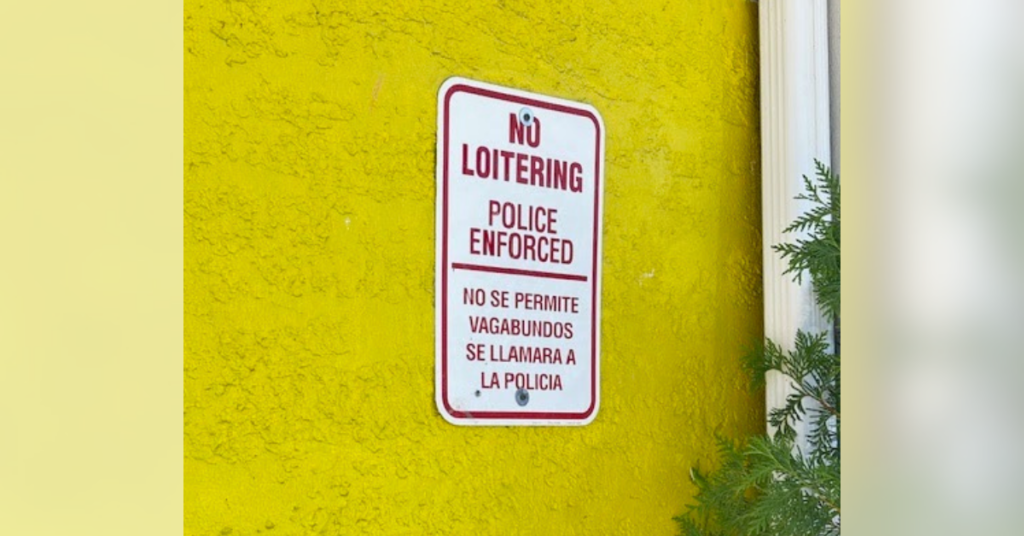
The research focuses on accessible public texts found in community spaces, including public signage and online publications. Students then analyzed writing styles and linguistic patterns in these texts across Statesboro and Savannah.
One student researcher, Kaidence Phillips, said that the opportunity to participate in community-based research was not only a positive experience, but a transformative one as well.
Variations in formality and the commercial focus of Spanish-language content reflect the needs and diversity amongst the two cities as well as highlighting space for improvement when it comes to consistency and informed translation.
“This research project taught me the importance of conducting research within our local spaces,” Phillips explained. “Studies like these open up new conversations that have the power to create change. By making people aware of language use in our communities, we can work together to create solutions to make media more consistent and better.”
After gathering dozens of photos from each city, students then began looking at similarities and differences in how Spanish was utilized among businesses, community service organizations, informal spaces and digital media.
Phillips represented the class’s research at CURIO Undergraduate Research and Intellectual Opportunities (CURIO) and GS4 symposiums highlighting student research projects.
The findings revealed both similarities to previously reported regional data and distinctive patterns that warrant further investigation, particularly with respect to the diversity of the Spanish language.
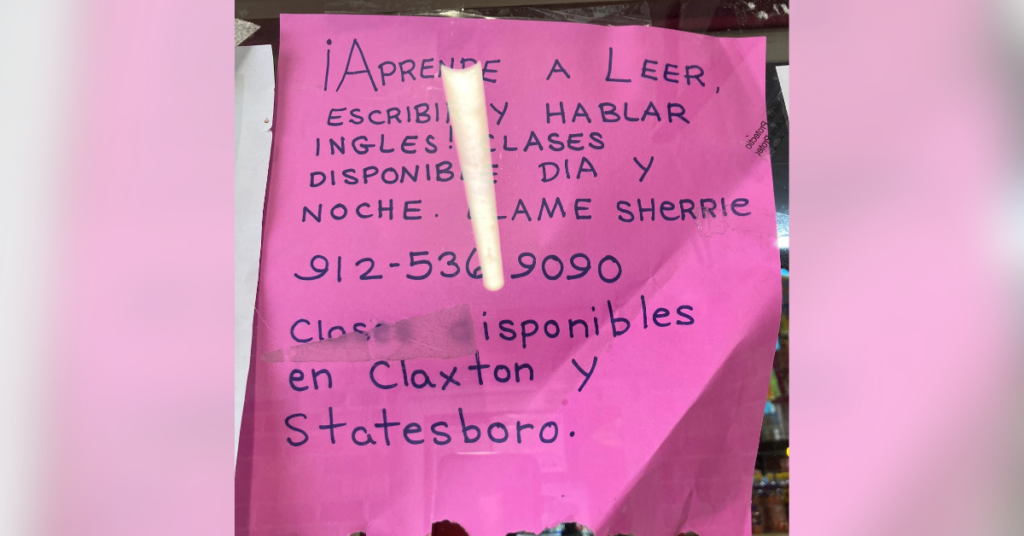
“In our project, students collected and analyzed original data from two Georgia cities, making the research personally meaningful and relevant. They were also able to connect what they learned about the Spanish language in the classroom to real-life contexts by observing how Spanish is actually used in public spaces. That connection between academic learning and everyday life made the experience particularly rewarding,” García explained.
Previously, García published a book project centering around Spanish poetry, “Voces, poemas e historias,” and believes student work is critical to furthering understanding of community, language and research both inside and outside of the classroom.
However, research opportunities soar beyond methodology and findings alone. For students, it’s a chance to contribute to a greater pool of knowledge while also getting involved off-campus. For Georgia Southern faculty, opening doors to new experiences is one of the many ways they encourage students to engage outside of the classroom.
“My favorite part was hearing how the project changed the way students think and observe the world around them. One student on the data analysis team told me that he had started applying some of the analytical techniques we used in the project to his current job,” García said. “Knowing that the project changed the way they perceive their everyday environment, including its language use, was incredibly gratifying.”