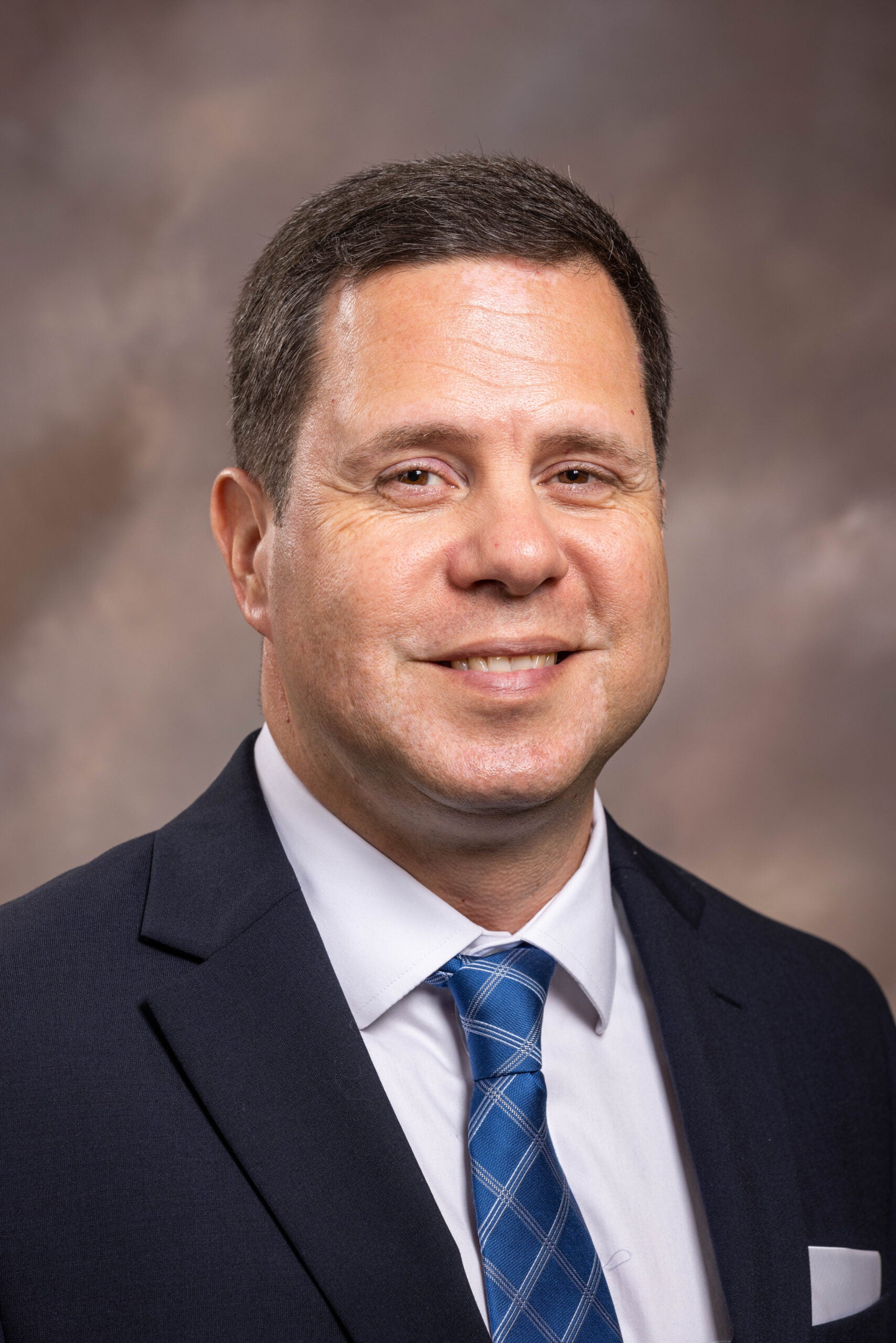
Joseph Kardouni, DPT, Ph.D.
Associate Professor, Waters College of Health Professions
Director, Tactical and Occupational Performance Institute
Home Campus: Armstrong
jkardouni@georgiasouthern.edu
Research Areas
Clinical biomechanics and neuromuscular control of human movement; musculoskeletal injury mitigation and rehabilitation; performance epidemiology
Education
- Ph.D.- Rehabilitation and Movement Science, Virginia Commonwealth University
- Doctor of Physical Therapy – Baylor University
- Master of Physical Therapy – U.S. Army-Baylor University Graduate Program in Physical Therapy
- B.A. – Biology Major, Chemistry Minor, University of Mississippi (Ole Miss)
Publications
- Melton BF, Cleveland R, Dulla J, Mews I, Ashley A, Keko M, Rochani H,
Kardouni JR. Reducing Injury Risk in Law Enforcement: Evaluating a
Standardized Physical Training Model with Fitness Outcomes. Published ahead of print: March 9, 2026. - Emberton JS, Adams BG, Hotaling BR, Zosel KL, Grist SM, Henderson N, Kardouni J, Westrick RB. Prevalence of Pain With Movement in Active Duty US Army Soldiers. Mil Med. 2024 Jul 3;189(7-8):e1523-e1527. doi:10.1093/milmed/usae048. PMID: 38531071
- Sousa CO, Nascimento JDS, Pozzi F, Kardouni JR, Michener LA. Shoulder Performance Activity Test (SPAT) for people with shoulder pain: feasibility, reliability and validity. Phy Ther. 2023 Mar 3;103(3):pzad006. doi: 10.1093/ptj/pzad006. PMID: 37172131
- Lynall RC, Wasser JG, Brooks DI, Call JA, Hendershot BD, Kardouni JR,
Schmidt JD, Mauntel TC. Investigating post-mild traumatic brain injury
neuromuscular function and musculoskeletal injury risk: A protocol for a
prospective, observational, case-controlled study in service members and active individuals. BMJ Open. 2023 Mar 22;13(3):e069404. doi: 10.1136/bmjopen-2022-069404. PMID: 36948547 - Ritland BM, Judkins JL, Naylor, JA, Kardouni JR, Pasiakos SM, Jayne JM. Associations between Sleep, Pain, and Musculoskeletal Injuries in U.S. Army Soldier. BMJ Mil Health. 2023 Feb 15:e002281. doi: 10.1136/military-2022-002281. Online ahead of print. PMID: 36792225
Funding
Current Grants
- Medical Technology Enterprise Consortium. A Purpose-Built Institute for Designing, Developing, and Implementing Health and Fitness Training Programs for the Warfighter. Kardouni JR, Riemann B, Melton B, Worst H, Henderson N, Cleveland R, Langdon J, Stoddard S. Principal Investigator, $5,582,300
- US Army Medical Research Acquisition Activity. Examining Educational Models for Soldiers to Improve Medical Readiness. Henderson N, Worst H, Kardouni JR, Townley A. Co-Investigator, $1,292,665.00
- Congressionally Directed Medical Research Programs. Pre-Neuoromusculoskeletal injury Risk factor Evaluation and Post-neuromusculoskeletal injury Assessment for Return-to-duty/activity Enhancement (PREPARE). Mauntel TC, Butowicz CM, Hendershot BD, Watson NL, Brooks DI, Goss DL, Whitehurst RA, Harvey AD, Helton MS, Kardouni JR, Garber MB. Co-investigator, $1,250,625
- Congressionally Directed Medical Research Programs. Post-Concussion Neuromuscular Function and Musculoskeletal Injury Risk. Mauntel TC, Lynall RC, Wasser JG, Brooks DI, Call JA, Hendershot BD, Kardouni JR, Schmidt JD. Co-investigator, $1,256,795
Research Projects
- Impacts of Body Armor on Humerothoracic, Scapulothoracic, and Glenohumeral Kinematics and Coordination During Shoulder Motion and Functional Movements- Musculoskeletal injuries are a significant concern in the military. In addition to carrying gear and heavy weights, soldiers are required to wear body armor, which further contributes to the physical burden. Few studies have looked at the effects of body armor on performing different manual handling tasks. In this study, we are examining the effect of body armor on humerothoracic, scapulothoracic and glenohumeral kinematics during upper extremity elevation and functional activities involving the upper extremity.
- A Purpose-Built Institute for Designing, Developing, and Implementing Health and Fitness Training Programs for the Warfighter– The overall goal of this project is to stand up a university-based research institute dedicated to advancing science and developing translational products related to Warfighter health and fitness. This institute will include a human performance lab and conduct cutting-edge research to address key challenges related to designing, developing, and implementing training programs for Warfighter health and fitness. The institute will inform and create solutions to shape programs implemented by all the services under the Department of Defense (DoD) and drive innovation within the private sector. This effort will expand upon current educational offerings and community engagement between Georgia Southern University and military partners with respect to health and fitness program development. The Tactical and Occupational Performance Institute will provide centralized leadership and governance for a purpose-built institute to serve Warfighters and other tactical occupations, bridging efforts across multiple colleges within the university, with a direct line of communication to university leaders from the levels of the Dean to Provost. This institute goes beyond lab and research center functionality by developing organic educational courses and translational knowledge products for Warfighters and the professionals who serve them. These products are based on available evidence, organic research and development capabilities of the university, and active engagement with Warfighters to provide services and receive direct feedback to formulate needs assessments for additional products. This creates a positive feedback loop for knowledge products and scientific advances to improve Warfighter health and fitness.