Georgia Southern students gain experience in mass casualty emergency simulation
Georgia Southern University health care students experienced emergency medicine from a different perspective, stepping into the roles of patients, triage nurses and worried family members, during a simulated mass casualty emergency.
On Oct. 22, nearly 70 students in Georgia Southern’s Bachelor of Science in Nursing and Bachelor of Science in Respiratory Therapy programs took part in a mock commercial aircraft disaster, helping airport staff and local hospitals test their emergency response procedures. This was the first year the University’s students participated.
The exercise began at Savannah/Hilton Head International Airport, where students were triaged and transported to one of three area hospitals: Effingham Hospital, Memorial Health or St. Joseph’s Hospital. The exercise put several hospital systems to the test, including: decontamination protocols, bed capacity, supply needs, admission procedures and staffing.
“Our students rarely get to see a hospital respond to a mass casualty event from the inside,” said Elizabeth Snyder, DNP, associate professor and interim chair of Georgia Southern’s School of Nursing, in the Waters College of Health Professions. “This partnership gave them real insight into how a large system coordinates under pressure.”
For students, the experience offered a perspective on emergency response they can’t find inside a classroom. Instead of serving as caregivers, they experienced the uncertainty and vulnerability of being patients during a crisis.
“Being on the other side of the stretcher showed me how overwhelming a disaster feels to a patient. I’ll carry that into every shift as a nurse,” said Alaina Twibell, a senior nursing student, who played a 33-year-old, 24-week-pregnant patient with lower abdominal bruising and a laceration.
Twibell arrived at the airport at 5:15 a.m. to have moulage, makeup simulating realistic wounds and injuries, applied before the exercise. She was transported to St. Joseph’s Hospital, where she stumbled into the hospital, crying out in pain and holding her mock baby bump as nurses assessed her condition. The scenario ended with a decision to transfer her by ambulance for an emergency cesarean section.
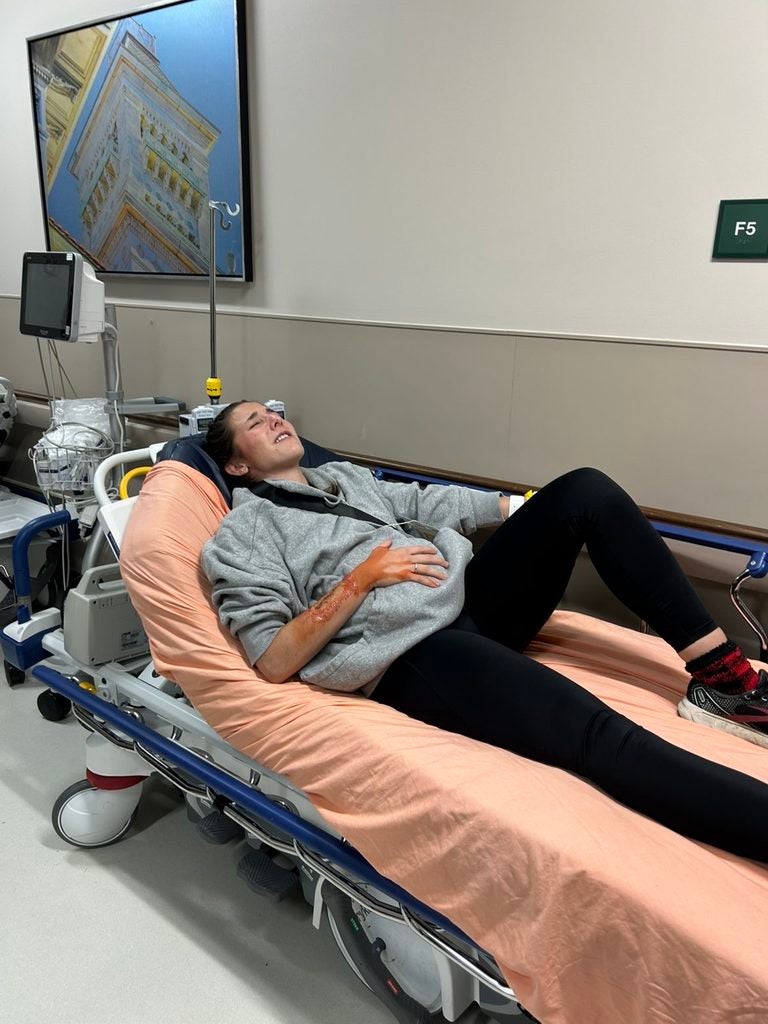
“It was definitely a hands-on experience,” Twibell said. “It gave me a chance to see the emergency response process from the patient’s perspective, but I also think my nursing background gave me insight on how to portray patients realistically.”
Federal Aviation Administration regulations require Class I commercial airports to conduct a full-scale emergency exercise every three years. Regular hospital services and airport operations were not affected.
Snyder hopes Georgia Southern will play a role in future exercises.
“We hope this is the beginning of a lasting partnership that gives our students more opportunities to learn from these experiences while supporting the emergency preparedness efforts of our community,” Snyder said.
“This experience helps prepare our students to think beyond their role as caregivers and understand the full patient experience during an emergency.”