
Georgia Southern researchers awarded grant to study N95 mask effectiveness for concrete workers
A team of Georgia Southern University researchers has been awarded a $142,000 federal grant to investigate how well N95 masks protect concrete workers from potentially harmful particles.
Funded by the Centers for Disease Control and Prevention’s National Institute for Occupational Safety and Health (CDC/NIOSH), the two-year study will examine workers’ exposure to hazardous dust particles at ready-mix concrete plants and evaluate the effectiveness and comfort of N95 masks in these conditions.
Ready-mix concrete (RMC), commonly used in construction projects ranging from residential buildings to highways, is produced by combining cement, water and other materials at specialized plants before transporting the mixture to construction sites. During production and handling, workers may be exposed to airborne dust that can cause respiratory illnesses, lung disease or even lung cancer.
“Currently, the levels of exposure remain largely unknown, and the effectiveness of commonly used N95 respirators in protecting against ultrafine particles in RMC plants has not been thoroughly assessed,” said Atin Adhikari, Ph.D., lead researcher and professor in Georgia Southern’s Jiann-Ping Hsu College of Public Health (JPHCOPH).
The U.S. RMC market is projected to grow more than 7% annually through 2030, and Georgia ranks among the top states for RMC production, with more than 300 plants supporting thousands of jobs.
“Concrete is all around us, from the roads we drive on to the buildings we live and work in. But we don’t always think about the people producing it and the risks they may face every day,” Adhikari said. “We want to better understand those risks and find practical ways to keep these workers safe.”
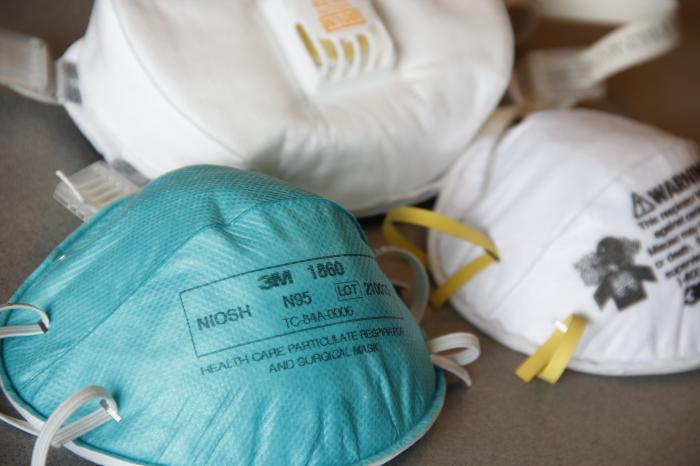
Most people assume that an N95 mask would be adequate protection, but Adhikari says this is not always the case. At RMC plants, electrically charged dust particles can affect how N95 respirators filter the air, potentially reducing their standard 95% filtration efficiency rate.
“Real-world conditions are complicated,” Adhikari said. “We want to understand how these respirators perform in actual workplaces, where workers are exposed to different types of dust and particles throughout the day.”
The research team has established partnerships with three RMC plants in Georgia, where they plan to collect air quality measurements and evaluate respirators. They hope to expand the research to facilities near Savannah.
The team will also examine the comfort level of the N95 masks. In hot concrete plants, discomfort can make workers less likely to wear respirators consistently.
“Assessing the comfort levels alongside effectiveness of masks is essential,” Adhikari said. “This will enable us to recommend an N95 respirator that truly enhances their safety against airborne ultrafine particles and silica dust.”
The project builds on Adhikari’s previous research examining respiratory protection, including a study of N95 masks used during cotton harvesting at local farms.
The research team includes co-investigator and JPHCOPH Assistant Professor Jhy-Charm Soo, Ph.D., and also brings together interdisciplinary collaboration with Aniruddha Mitra, Ph.D., professor of mechanical engineering in Georgia Southern’s Allen E. Paulson College of Engineering and Computing, and Saman Hedjazi, Ph.D., assistant professor of construction management at Kennesaw State University.
“By bringing engineering, construction management and public health together, we can better understand these challenges and find ways to protect workers where it matters most: on the job,” said Mitra, who will use his mechanical engineering expertise to design and build the equipment to collect particle samples.
The project is funded through August 2028, and researchers hope the findings will lay the groundwork for larger studies.
“At the end of the day, this research is about the people who go to work every day and deserve to come home healthy,” Adhikari said. “If we can help make their work environments safer, then we’re making a real difference.”